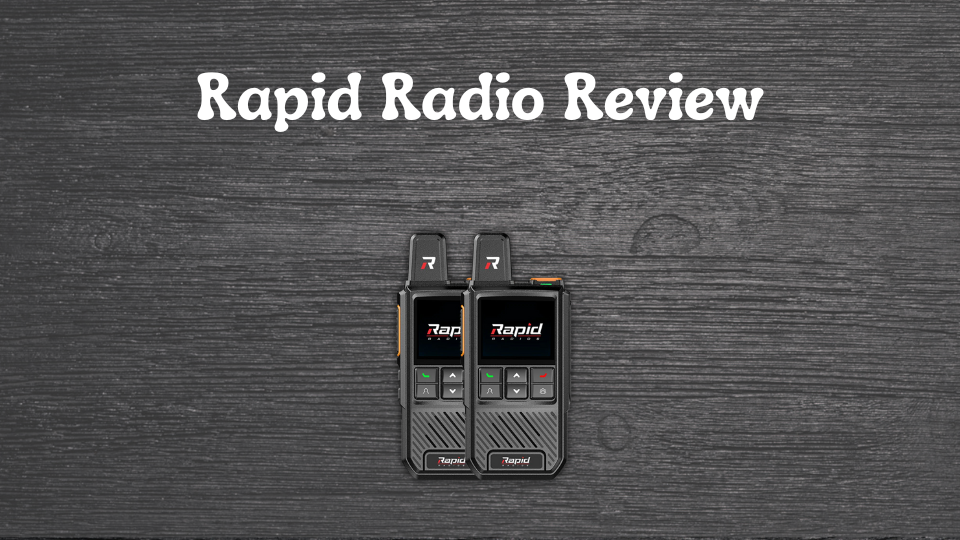
When searching for reliable communication devices, Rapid Radios often comes up due to their bold claims of nationwide coverage, no monthly fees, and encrypted communication. But do they live up to the hype? In this Rapid Radio review, we’ll dive into their features, performance, customer feedback, and limitations to help you decide if they’re the right choice for your needs. Based on insights from user reviews and expert analysis, this guide aims to provide a balanced, trustworthy evaluation.
What Are Rapid Radios
Rapid Radios, offered by Rapid Consulting LLC, a Michigan-based company, are push-to-talk (PTT) walkie-talkies that operate over LTE cellular networks. Unlike traditional radios that rely on UHF/VHF frequencies, Rapid Radios use a multi-carrier SIM card to connect to major U.S. cell networks, promising "unlimited range" and clear, encrypted communication. They market two main products:
-
Rapid Radio: Designed for everyday use with nationwide LTE coverage and no monthly fees, though an optional annual SIM renewal fee applies after the first year.
-
My Emergency Radio: Built for emergency scenarios, operating on radio repeaters instead of cellular networks for off-grid communication.
The company emphasizes ease of use, long battery life, and suitability for families, outdoor enthusiasts, and businesses. But how do these claims hold up in real-world use?
Key Features of Rapid Radios
Here’s a breakdown of the standout features based on Rapid Radios’ official site and user feedback:
-
Nationwide Coverage: Rapid Radios claim to work anywhere in the U.S. with LTE coverage, leveraging multiple carriers for maximum connectivity. Some users report successful communication over long distances, like from the Northeast to California or even internationally with the global plan.
-
No Monthly Fees: Unlike traditional cellular plans, Rapid Radios advertise no recurring monthly costs, though an annual SIM renewal fee (around $50 per radio) applies after the first year.
-
Encrypted Communication: The radios use AES and end-to-end encryption, ensuring private conversations that only group members can hear.
-
Ease of Use: Designed for all ages, they require no programming or licenses and work straight out of the box.
-
Long Battery Life: Users praise the 5-day battery life, with USB-C charging for convenience.
-
Durability: The radios are built to withstand tough environments, making them suitable for outdoor activities like hiking or hunting.
Performance and User Feedback
To provide a comprehensive Rapid Radio review, we analyzed user experiences from platforms like Trustpilot, Reddit, and Amazon, along with insights from radio enthusiasts.
Positive Feedback
Many users are impressed with Rapid Radios’ performance in areas with weak cellular signals. For example:
-
A Trustpilot reviewer noted, “I work in a pit with zero cell service, but these radios stayed connected with my wife at her job—crystal clear the whole time.” They highlighted the noise-canceling feature and reliable signal in challenging environments.
-
Another user shared, “We used them in Belize to talk to family in Pennsylvania with crystal-clear communication,” emphasizing the global plan’s effectiveness.
-
Families in rural areas, like the Rocky Mountains, appreciate the radios for staying in touch when cell phones fail. One parent said, “They’re perfect for my tweens—I don’t want them to have phones, but I need to communicate for pickups.”
Rapid Radios has a 4-star rating on Trustpilot based on over 150 reviews, with many praising the customer service team’s responsiveness. For instance, a user named Donna Tucker from Texas wrote, “I have 15 radios, and they all work perfectly. Customer service is awesome!”
Criticisms and Limitations
Despite the positive feedback, Rapid Radios have faced significant criticism, particularly from radio enthusiasts and those expecting true off-grid capabilities:
-
Dependence on Cellular Networks: The biggest drawback is that Rapid Radios rely on LTE networks. If cell towers go down, as during hurricanes or major outages, the radios become inoperable. A Reddit user in Western North Carolina noted, “Cell phones were down for four days after Hurricane Helene. I wouldn’t rely on a radio that needs cell towers.”
-
Misleading Marketing: Several Reddit users on r/gmrs and r/amateurradio call Rapid Radios’ advertising deceptive, particularly claims of working in “SHTF” (survival) scenarios. One user stated, “They claim it works when cell phones don’t, but it’s just a cellphone in a walkie-talkie shell.”
-
Annual Fees: While marketed as “no monthly fees,” the annual SIM renewal fee (around $50 per radio) catches some users off guard. A Trustpilot reviewer complained, “I bought four radios for $800, and now I’m hit with $200 annually for SIM cards. It feels like a scam.”
-
Limited International Performance: Some users report issues with the global plan. One customer said, “I was assured they’d work in the Bahamas, but they didn’t work at all. The 7-day return window had passed, so I was out of luck.”
-
Customer Service Issues: While some praise the support, others report long wait times or unresolved issues. A Reddit user mentioned, “I contacted customer service multiple times with no results. Their service is the worst.”
Comparing Rapid Radios to Alternatives
To assess Rapid Radios’ value, let’s compare them to other communication options:
-
Traditional Walkie-Talkies (GMRS/FRS): These operate on UHF/VHF bands and don’t rely on cell networks, making them better for true off-grid use. However, they have limited range (typically 1-5 miles) unless using repeaters, and GMRS requires an FCC license.
-
Zello App: A free push-to-talk app that works over Wi-Fi or cellular data. It’s a cost-effective alternative but requires a smartphone and lacks the dedicated hardware of Rapid Radios.
-
Ham Radios: Offer global communication via repeaters or ECHOLink but require licensing, technical knowledge, and often more expensive equipment.
-
Satellite Phones: Ideal for remote areas with no cell coverage, but they come with high upfront costs and subscription fees.
Rapid Radios stand out for their ease of use and nationwide coverage without a license, but they’re not a true replacement for traditional radios in grid-down scenarios.
Who Are Rapid Radios Best For?
Based on user reviews and technical analysis, Rapid Radios are best suited for:
-
Families and Small Groups: Ideal for staying in touch in areas with decent LTE coverage, such as during outdoor activities or in rural settings with spotty cell service.
-
Businesses: Useful for teams needing reliable, long-distance communication, like delivery services or event coordination.
-
Casual Users: Great for those who want simple, phone-free communication for kids or elderly family members.
They’re less suitable for:
-
Preppers or Survivalists: If you need communication during a complete grid failure, traditional ham or GMRS radios are more reliable.
-
International Travelers: The global plan has mixed reviews, with some users reporting connectivity issues abroad.
Final Verdict: Should You Buy Rapid Radios?
Rapid Radios offer a compelling solution for nationwide, easy-to-use communication with no monthly fees and strong battery life. They excel in scenarios with LTE coverage, making them a great choice for families, businesses, or casual users. However, their reliance on cellular networks limits their effectiveness in true emergency or off-grid situations, and some users find the annual fees and marketing claims misleading.
If you’re looking for a user-friendly walkie-talkie for everyday use in areas with cell coverage, Rapid Radios are worth considering. For survivalists or those needing guaranteed off-grid performance, traditional GMRS or ham radios are a better bet.
Before purchasing, check Rapid Radios’ official site for the latest pricing and warranty details, and consider reaching out to their Michigan-based support team for clarification on the annual SIM fee or global plan.
Disclaimer: Always verify product specifications and return policies before buying. User experiences may vary based on location and network conditions.
Where to Buy
You can find the latest model on:
Also Read