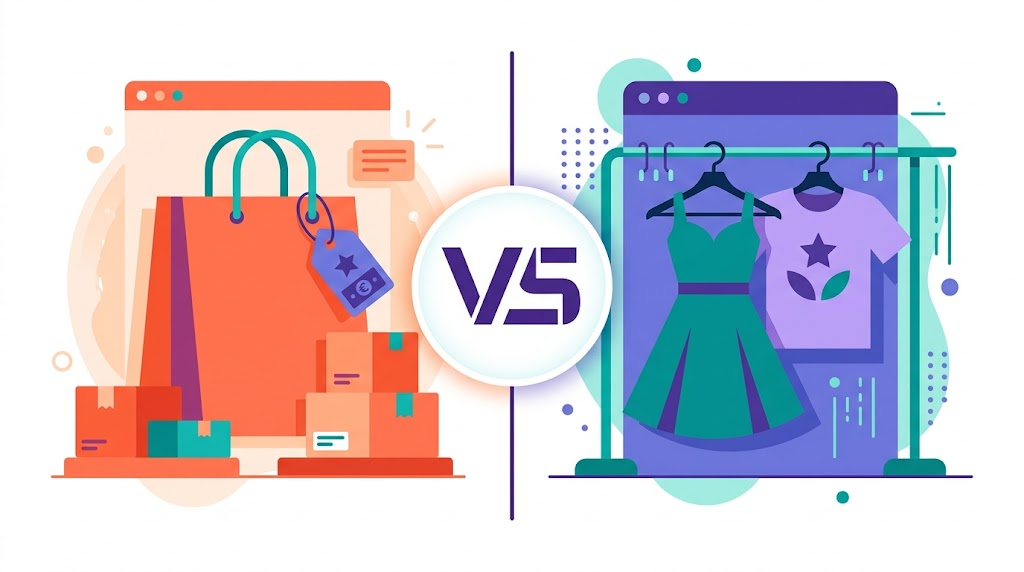
Temu and Shein have redefined what shoppers expect to pay online — and together they now pull in hundreds of millions of visits every month. But “cheap” and “safe” are not the same thing, and in 2026 the two platforms behave very differently once your money leaves your account. Temu grew from under 1% of the global cross-border e-commerce market in 2022 to roughly 24% by early 2026, while Shein holds about 9% with an apparel-first model — and their complaint records diverge just as sharply.
This is RatingFacts’ head-to-head comparison of Temu vs Shein: pricing, product quality, delivery speed, returns, data practices, and scam/complaint signals — so you know which platform fits which purchase, and which purchases you should not make on either.
TL;DR: Both are legitimate companies — orders arrive and refunds generally process. Shein edges Temu on overall trust (fewer regulatory penalties, stronger fashion QC at its price point); Temu wins on price breadth beyond clothing and on its newer US-based seller program. Neither should be used for safety-critical, durability-critical, or expensive electronics purchases — check item-level reviews and measurements first, pay on-platform, and keep expectations calibrated to the price. See our full Temu legitimacy review and most-complained-about retailers report for the deep dives.
Company Backgrounds: Who You Are Buying From
- Temu launched September 2022, owned by PDD Holdings (also behind Pinduoduo). It runs a marketplace/discovery model connecting mostly China-based sellers with Western buyers at near-factory prices, expanding in 2025-2026 to recruit US-based local sellers for faster shipping.
- Shein founded 2012 in Nanjing, now headquartered in Singapore. It pioneered ultra-fast-fashion on-demand manufacturing — thousands of new styles daily, small production batches scaled instantly when items trend.
- Traffic reality check: Temu has been among the most-downloaded shopping apps worldwide since 2023, with site traffic measured in the hundreds of millions of monthly visits; Shein remains the top fast-fashion app by downloads in most Western markets. Both dwarf most legacy retailers’ app engagement.
Pricing: Who Is Actually Cheaper?
| Factor | Temu | Shein |
|---|---|---|
| Category breadth | Everything: home, gadgets, tools, crafts, fashion | Fashion, beauty, home décor; limited general merchandise |
| Typical price band | $1-$20 impulse items dominate | $3-$30 apparel dominates |
| Coupon mechanics | Aggressive: spin wheels, bundle credits, referral credits | Points system, student discounts, flash sales |
| Shipping cost | Mostly free standard shipping with minimum order | Free above a low threshold; otherwise flat fee |
| True-cost gotcha | Low per-item price encourages over-ordering; quality misses mean re-buys | Sizing variance drives return friction; final price still cheap but re-orders add up |
Verdict: For non-fashion categories, Temu is typically cheaper because the catalog simply does not exist on Shein. For clothes, prices converge — Shein’s scale advantage in apparel means comparable or better per-garment value, with far better fit consistency than Temu’s no-name listings.
Quality: What the Reviews Say
Independent sentiment analyses consistently find negative-review shares in the 35-50% range on major platforms for this segment: roughly 38% negative sentiment for Shein and ~46% for Temu in aggregated analyses we cited in our most-complained-about report. The failure modes differ:
- Temu: item-not-as-described leads (size, material, functionality), electronics are the riskiest category, photos-vs-reality gaps are the #1 complaint pattern in 1-star reviews.
- Shein: fabric quality and sizing inconsistency dominate — but the baseline is more predictable because apparel QC is Shein’s core competence. Its better-reviewed lines (e.g., higher-tier labels) show measurably fewer quality complaints.
Practical rule used by experienced buyers on both platforms: sort reviews by most recent with photos only, ignore the first-page curated ratings, and treat any listing with under ~100 reviews as unproven regardless of star average.
Safety, Trust & Regulatory Track Record
- Temu: paid a $2M FTC penalty (2025) related to INFORM Consumer Act compliance failures — a real enforcement action, though modest relative to revenue. BBB profile shows thousands of unresolved complaints concentrated in delivery and refunds. Product-safety scrutiny (recalls, banned-substance tests by EU authorities) has repeatedly flagged marketplace listings.
- Shein: logged 7,211 BBB complaints over three years (3,920 in the most recent 12 months) per the Los Angeles BBB portal — heavy volume driven by scale, with mixed resolution outcomes. Shein has faced EU product-safety findings too, plus ongoing scrutiny of its supply-chain disclosures as part of its long-mooted IPO.
- Data privacy: both collect extensive behavioral data; both were queried by regulators. No public enforcement finding against either rises to the level of “do not use,” but avoid storing saved payment cards if you shop infrequently.
- Payment safety: paying on-platform with a credit card or PayPal keeps you inside chargeback/dispute protection. Never complete a transaction off-platform because a “seller” offered a discount — that is the classic escalation scam pattern on every marketplace.
Composite trust scores from independent reviewers put them close: roughly 58-60 out of 100, with Shein slightly ahead on consistency and Temu slightly ahead on dispute responsiveness since it introduced its purchase-protection program extensions in 2025-2026.
Delivery Speed & Returns
| Factor | Temu | Shein |
|---|---|---|
| Standard delivery | ~7-15 days (faster for US local-seller items) | ~7-21 days typical |
| Returns window | 90 days on most items, free first return per order | 30-45 days depending on region/item |
| Refund reliability | Refunds process, but complaint volume shows friction on damaged/wrong items | Refunds process; friction concentrates on fit-driven exchange loops |
| Best strategy | Order early, never for deadlines | Order two sizes, return one, before the window closes |
Which Should You Use? Decision Guide
- Buying gadgets, tools, home goods, craft supplies: Temu — Shein doesn’t carry most of it. Keep individual item risk low (under ~$25) and read photo reviews.
- Buying clothes: Shein — better fit data, size-consistency tooling, and trend turnover. Check the garment-specific reviews, not brand-level stars.
- Need it within two weeks: neither reliably — use Amazon/Walmart-style domestic fulfillment instead (our highest-rated stores report covers who scores best).
- Expensive electronics, safety gear, kids’ car seats, supplements: neither. Buy authorized channels — counterfeit and certification risk outweighs the savings.
- Either way: pay by credit card/PayPal, screenshot the listing, and file disputes inside the protection window rather than negotiating with sellers by chat.
Frequently Asked Questions
Is Temu cheaper than Shein?
For non-clothing categories, yes — often by 20-40% on comparable generic items, because Shein’s assortment is fashion-centric. On clothing, pricing is close; Shein frequently wins after accounting for fewer quality re-purchases.
Which has better quality, Temu or Shein?
Within its specialty, Shein — apparel QC is its core competency and its negative-sentiment share (~38%) runs below Temu’s (~46%). Temu quality varies more listing-to-listing because inventory comes from many independent sellers.
Are Temu and Shein scams?
No — both are legitimate businesses that deliver orders and process refunds. They carry elevated complaint density relative to scale and documented regulatory citations (Temu’s $2M FTC penalty; Shein’s BBB complaint volume). Risk concentrates in individual listings and category choice, not in the platform stealing payments.
Is Shein or Temu safer for credit cards?
Both use standard encrypted checkout. Safety comes from the rail, not the store: pay on-platform with a credit card or PayPal so you retain chargeback rights. Avoid debit cards and never pay a seller directly off-platform.
Why is Temu so much cheaper than everything else?
Factory-direct marketplace economics: Chinese manufacturers list at thin margins, subsidized logistics keep shipping near-free, and Temu historically spent heavily on customer acquisition subsidies. Costs surface elsewhere: longer waits, variable QC, and high return friction.
Methodology & Sources
This comparison was produced by the RatingFacts Editorial Team (author: Marcus Lee, E-Commerce & Retail Analyst), August 2026. Signals weighed: cross-border market-share and GMV estimates (Marketplace Pulse / Digital Commerce 360 summaries, Feb 2026), BBB complaint portals (Los Angeles BBB for Shein; national profiles for Temu), FTC enforcement records (Temu INFORM Act penalty), independent sentiment analyses of negative-review shares, delivery-window disclosures on both sites, and RatingFacts moderated reviews. Figures are directional and shift quarterly; complaint counts update monthly. Ranks reflect complaint intensity relative to scale, not legal judgments.